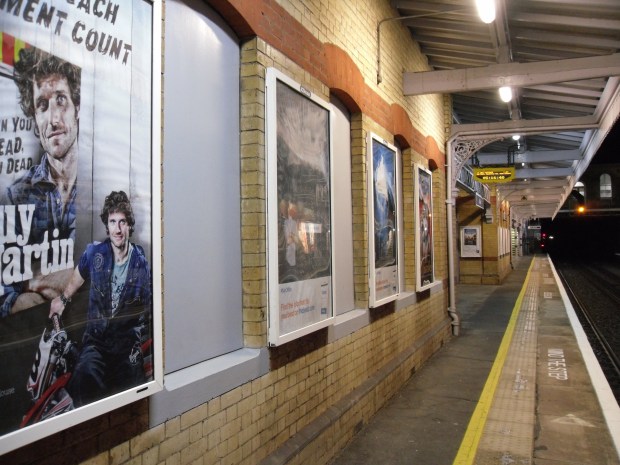
 In a quiet corner of outer London, a village that by the early hours has closed down its recognition of the sounds of city life, the local train station shares the growing adornments that have become all too common. Like much of the advertising world’s accoutrements, these are nothing new but as Kurt Iveson (1) put it, the difference is in the quantity and the form of the advertising.
In this sleepy, village station, a multitude of posters have taken to the walls like a growing menace. A trestle ivy of advertising wares that seek to ensure there is no respite from their ever-growing need for attention. And in case you had become accustomed to the point of forgetting their existence, a new step in evolution has come out of the shadows, the back-lit poster. 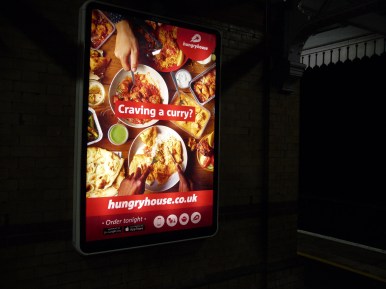 This is not an advent like that found in the most electrified parts of the city such as the underground where electronic screens display moving images or the giant screens at the centre but it is an indication that the evolution of affordability has taken the early steps into the suburbs.
Here the station that, like the village that surrounds it, was once a quiet haven from the hustle less than an hour away has begun to know some of that hustle. The evolution promises that the tide is turning. The cost of erecting brighter, bigger ads further and further out of the city is falling all the time. As is the cost of maintaining them.
The signs have not been hidden. Indeed, they’re there for all to see.
(1) Branded cities: outdoor advertising, urban governance, and the outdoor media landscape – Kurt Iveson
School of Geosciences, University of Sydney, NSW, Australia;
 bungalooloo