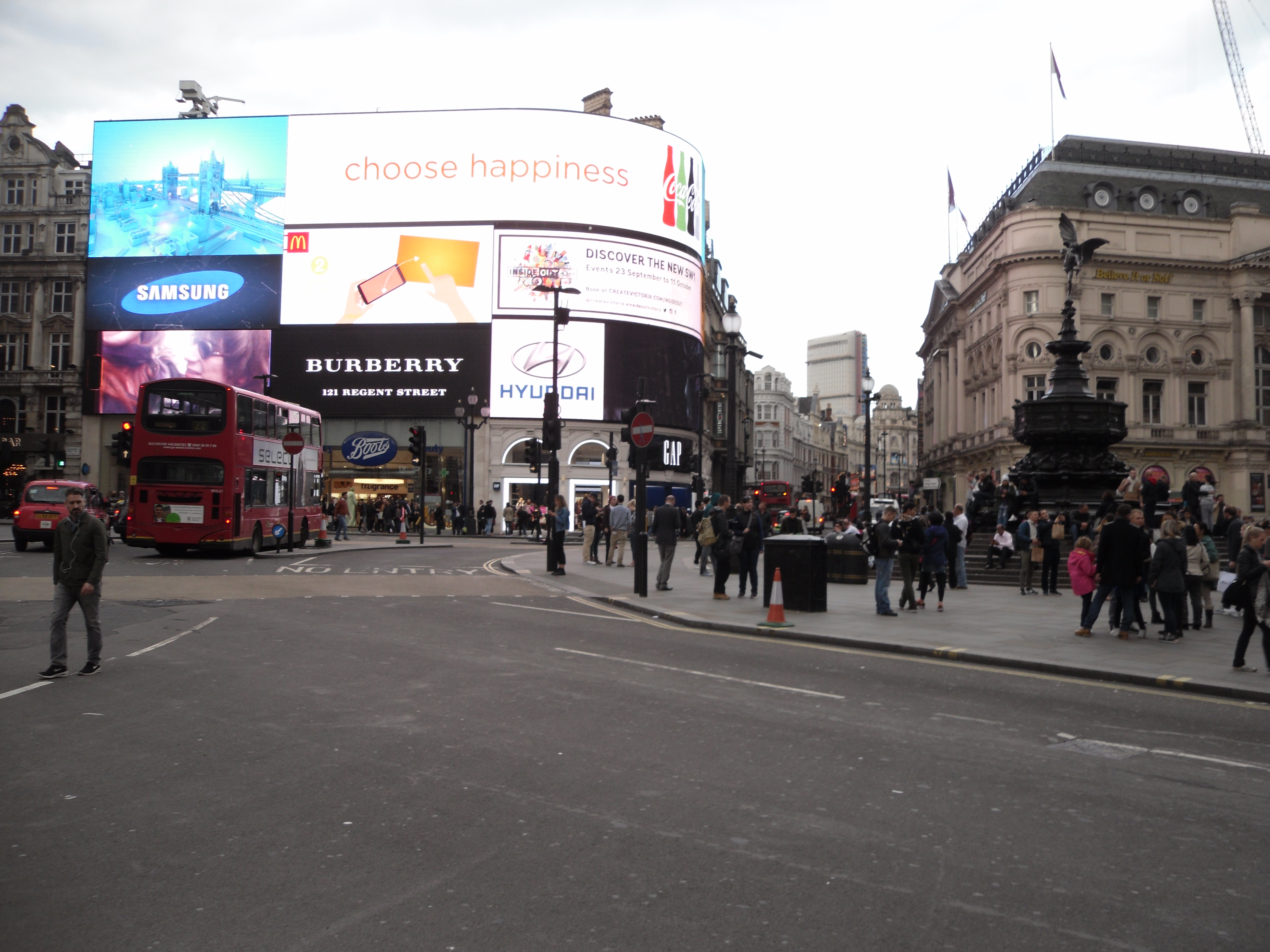
Piccadilly Light

The lights at Piccadilly Circus

The lights of Piccadilly Circus have been lit since 1908 when Perrier became the first illuminated sign thanks to the glow of the electrified filaments in the incandescent light bulbs although it was the makers of Bovril who enjoyed the prestige of the first neon sign around 1923.

Apart from all of perhaps six people in the world and a period during world war two, none of us have known Piccadilly without the lights. Now, this oddity of landmarks stands among the very latest in technological advertising where videos wrap around the buildings on curved screens. This artificial normality has settled comfortably into the context of London life and much like the lights of Times Square in New York, a kind of affectation of the modern, prosperous city.

Is this just wish fulfilment of an economic society in constant pursuit of capitalism, hoping that each horizon will bring a better dawn that demands such constructs? The impact of the screens is temporary, at best. Seasoned Londoners hardly notice they’re there and even tourists move along after a time. So who truly benefits from having the signs in place other than, perhaps, the landlords of the buildings they adorn?

http://www.telegraph.co.uk/finance/newsbysector/constructionandproperty/8796899/Piccadilly-Lights-A-timeline.html

http://www.sndelectrical.co.uk/a-short-history-of-piccadillys-lights/

https://en.wikipedia.org/wiki/List_of_the_verified_oldest_people
Old City New City Now

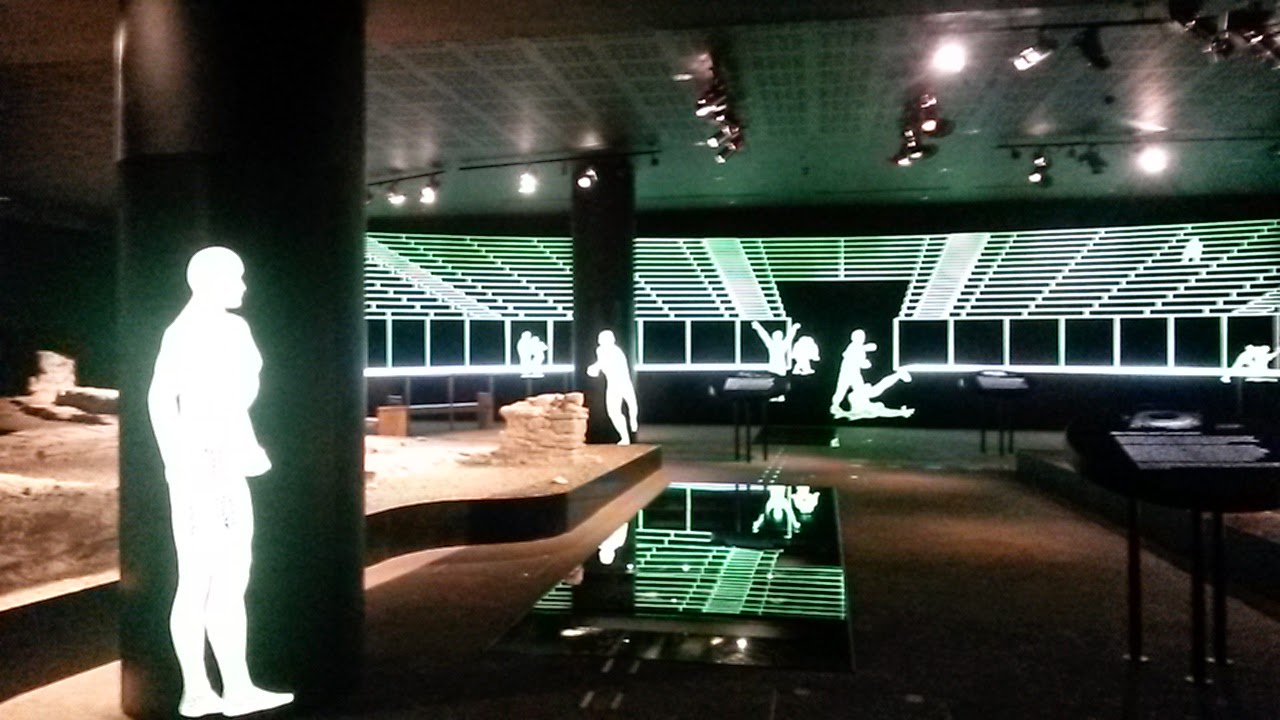
Deep beneath the City of London Guildhall Art Gallery are the remains of a Roman Amphitheatre, accessible to visitors via the Art Gallery. One can walk among the ruins and by virtue of thick glass panels set in the floor, even walk over them, gazing down into the old gutters.

To give visitors a sense of what it might have been like, the gallery have constructed a façade detailing the tiered seating along with a number of bodies in motion. Against a black background, the seating and bodies are etched in a computer graphic fashion not dissimilar to what you might expect in the original Tron movie. They’re not in the style of smooth CGI common in modern films but more in the sense of mathematical frameworks.

20141204_133918
The Roman Amphitheatre – City of London Guildhall Art Gallery

The effect is beguiling and intriguing. Standing, looking up at the seating with a piped soundtrack of crowds cheering, you can almost imagine you’re there. Futuristic imagery seeking to complete the ancient ruins peels away the aeons. Past and future combine in the visitor’s present experience. The city is alive again in the way that it once was and it whispers to your inner self the simple truth that such a life of brutality is never really that far away.